
Septic System Installation & Replacement – Linn County, Iowa | Madison’s Homes
Madison’s Homes provides septic system installation and septic replacement for rural homes, acreages, and new construction in Linn County, Iowa, and nearby communities. Call or text Patrick Madison at 319-936-6100 to discuss your property.
- Septic services: Installation, replacement, repairs, and inspections throughout Linn County, Iowa.
- Iowa Master Plumber: Patrick Madison, owner of Madison’s Homes.
- Certified Septic Installer: CIOWTS Level B — ID #510365.
- Iowa DNR-Certified Time-of-Transfer Inspector.
- Exterior and interior work: Septic excavation and installation, plus licensed plumbing inside your home.
- New homes, additions, and existing properties.
- Based in Center Point, Iowa.
Septic Service Areas Near Center Point, Iowa
Madison’s Homes provides septic installation, replacement, repairs, and inspections in Linn County and nearby communities, generally within approximately 30 minutes of our Center Point base.
- Center Point: 52213
- Toddville, Alburnett, and Palo: 52341, 52202, 52324
- Robins and Hiawatha: 52328, 52233
- Walker and Central City: 52352, 52214
- Marion and north/northwest Cedar Rapids: 52302, 52402, 52411
- Urbana, Shellsburg, and Vinton: 52345, 52332, 52349
- Brandon: 52210
We serve rural homes, acreages, and new construction in these areas. Call or text 319-936-6100 with your project address to confirm service availability.
Explore Our Septic Services
Select a topic to jump to that section.
- New Septic System Installation
- Septic System Replacement
- Soil Testing and Site Evaluation
- Septic Design, Permits and Inspections
- Septic Tanks, Baffles and Filters
- Conventional Gravity Systems
- Pumps, Pressure Distribution and Alarms
- Mound and At-Grade Systems
- Sand Filters and Advanced Treatment
- Excavation and Installation Equipment
- Septic Installation and Replacement Costs
- Septic Maintenance and Pumping
- Warning Signs and Septic Repairs
- Time-of-Transfer Septic Inspections
- Septic Systems for New Homes and Additions
New Septic System Installation in Linn County, Iowa
Building a home on property without public sewer starts with planning a septic system that fits the land and the household. Madison’s Homes provides new septic system installation in Linn County, Iowa, with owner Patrick Madison handling excavation and installation work and coordinating the project with the appropriate permitting and inspection authorities.
Plan the septic system before finalizing the building layout
The septic tank and drainfield need suitable locations alongside your proposed home, well, driveway, utilities, and future improvements. Planning these together helps avoid conflicts, such as placing a garage or addition where the soil treatment area needs to go. Protect the proposed drainfield from construction traffic, stockpiled material, and unnecessary grading while the site is being developed.
Choose the system around the soil and site conditions
A septic tank is only one part of the wastewater treatment system. It separates and retains solids, while the components downstream provide additional treatment and dispersal. Soil conditions, seasonal groundwater, available space, elevations, and household design flow help determine which system is appropriate. A conventional gravity system may suit one property, while another may need pumping or additional treatment.
What the installation involves
- Site review: Review the approved layout, access, elevations, utilities, and areas that must remain undisturbed.
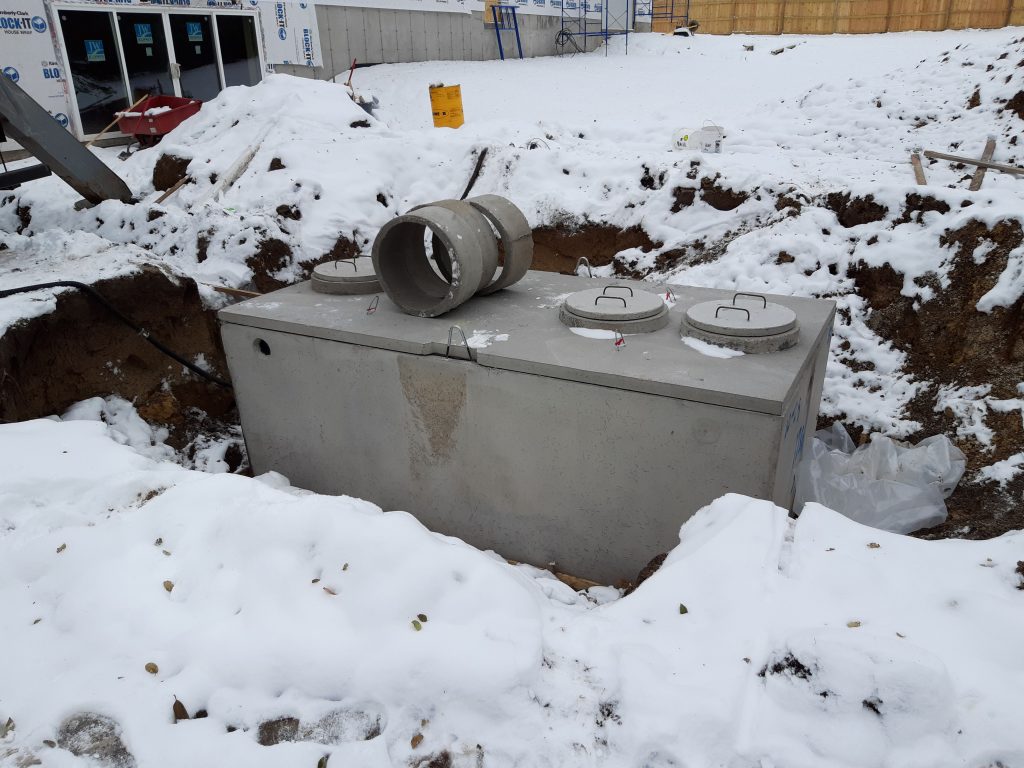
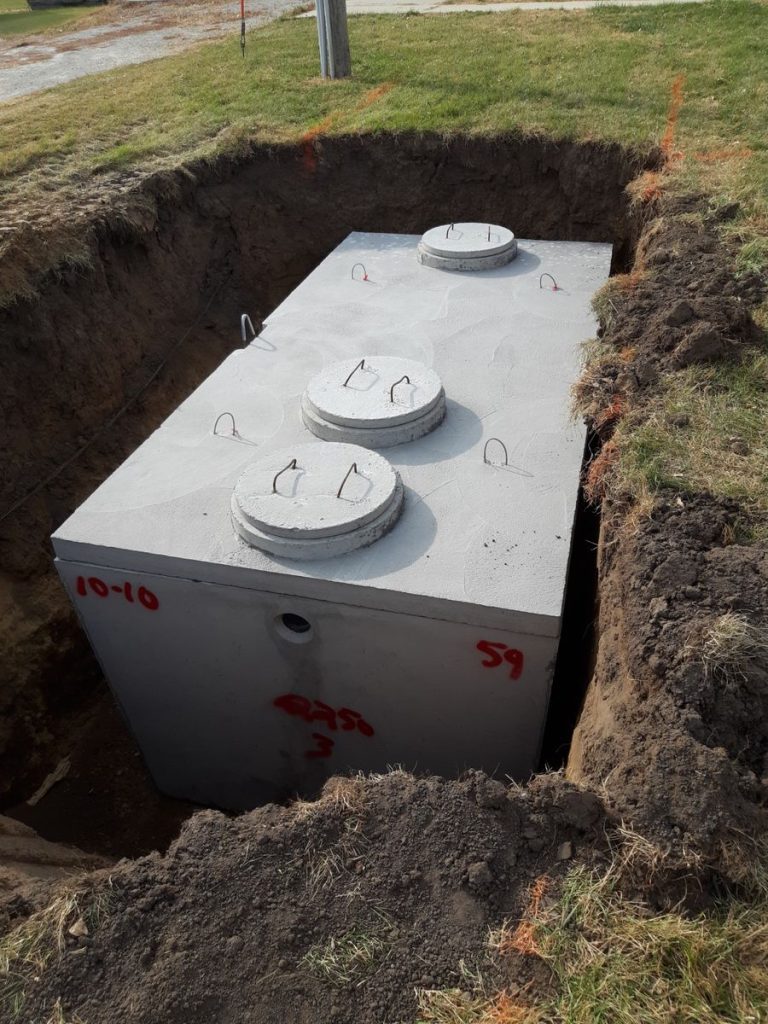
- Excavation and tank placement: Prepare the excavation and bedding to suit the approved design and tank manufacturer’s requirements.
- Piping and connections: Install supported piping, watertight connections, and accessible service points.
- Treatment and dispersal: Install the approved drainfield or other treatment components while protecting the receiving soil.
- Pumps and controls where required: Coordinate pump, float, alarm, and electrical work with the appropriate trades.
- Inspection and completion: Arrange required inspections before covering the work, then complete backfilling, grading, and startup checks.
Licensed plumbing inside your new home, too
Patrick is an Iowa Master Plumber as well as a certified septic installer. Madison’s Homes can handle the interior plumbing and its connection to the septic system, with the required plumbing permits and inspections. For a larger building project, we also offer excavation, concrete basement walls, and framing.
Planning a new septic system? Call or text Patrick at 319-936-6100 to discuss your property, building plans, and installation needs.
Local resource: Visit Linn County Public Health’s septic program for permit information and county resources.
↑ Back to septic services index
Septic System Replacement in Linn County, Iowa
An older septic system does not always need complete replacement. A problem may involve a damaged pipe, a clogged effluent filter, a failed pump, a deteriorated tank, or a drainfield that can no longer accept wastewater properly. Madison’s Homes evaluates the problem and discusses repair or replacement options before establishing the scope of work.
Find out why the existing system is failing
Replacing a tank alone will not correct a failing drainfield. Likewise, a plumbing blockage inside the home can cause backups even when the outdoor septic components are functioning. Finding the cause helps determine which components need attention and whether existing portions can remain in service, subject to their condition and county approval.
- Tank condition: Check for deterioration, damaged baffles, leaking connections, and access problems.
- Piping and distribution: Investigate blockages, damaged lines, and uneven wastewater distribution.
- Pumps and controls: Evaluate pump operation, floats, alarms, and related components where installed.
- Drainfield condition: Investigate wastewater surfacing, persistent wet areas, and treatment-area performance.
- Household changes: Review additional bedrooms, building additions, and changes in wastewater use.
Plan the replacement around your property
A replacement system must fit the available land and suitable soil. Existing buildings, wells, driveways, utilities, property boundaries, and future construction plans all affect the layout. The new treatment area may need a different location or system type rather than simply rebuilding the old system in the same place.
We coordinate the proposed work with Linn County Public Health and arrange the required approvals and inspections. Before excavation, the project plan should address equipment access, protection of the new treatment area, and how household wastewater will be managed while the existing system is disconnected.
What happens to the old septic tank?
Unused septic tanks must be properly taken out of service. Depending on applicable requirements and site conditions, this can involve pumping by a qualified provider followed by removal or approved abandonment in place. Old tanks should not be left as hidden underground voids that could collapse beneath people, equipment, or future construction.
One contractor for septic work and interior plumbing
As an Iowa Master Plumber and certified septic installer, Patrick can address interior drain piping and plumbing connections alongside the outdoor replacement work. If the project is part of a home addition, we can also discuss excavation, concrete basement walls, and framing as part of the overall construction plan.
Need a septic replacement assessment? Call or text Patrick at 319-936-6100. Existing septic drawings, inspection reports, maintenance records, and information about recent problems are helpful when planning the next step.
↑ Back to septic services index
Soil Testing and Site Evaluation for Septic System Installation
The soil on your property helps determine which septic system can work, where it can be installed, and how much treatment area it needs. Two neighboring properties may require different systems because their soil layers, drainage, slopes, or groundwater conditions differ.
The soil does more than absorb water
After wastewater leaves the septic tank, it still needs treatment. In a soil-based system, suitable soil beneath the distribution area helps treat the wastewater before it reaches groundwater. A location that drains quickly is not automatically suitable, and a large yard does not guarantee that every part of it can support a drainfield.
What a site evaluation considers
- Soil texture and structure: The characteristics of the soil affect wastewater movement and treatment.
- Soil layers: Restrictive layers, shallow bedrock, and disturbed or filled ground can limit system options.
- Seasonal groundwater: An evaluation considers evidence of seasonal wetness, even when the ground appears dry during the visit.
- Slope and drainage: The layout must account for the terrain and water moving across the property.
- Available space: Buildings, wells, utilities, property boundaries, and required separation distances affect placement.
- Household needs: The proposed home, bedrooms, and applicable design-flow requirements affect system sizing.
Soil evaluation and percolation testing
A soil evaluation examines the soil profile and site conditions. A percolation test measures how water moves into soil under specified test conditions. These provide different information; a percolation result alone does not describe every limitation of a site. The evaluation and testing required for your project should be confirmed with Linn County Public Health.
Protect suitable ground before construction begins
Discuss the proposed septic area before clearing, excavation, or heavy equipment traffic begins. Compaction, rutting, and changes to the natural soil can affect its ability to receive wastewater. Keep material stockpiles, construction access routes, and equipment staging away from the planned treatment area.
Soil moisture also matters during installation. Working soil when it is too wet can smear and compact the receiving surfaces. Scheduling must account for ground conditions as well as the construction timetable.
Coordinate your septic layout with future improvements
If you are planning a basement, addition, garage, or driveway, include those plans in the site discussion. Madison’s Homes can coordinate excavation and construction planning around the approved septic layout so the work fits together.
Planning resource: Visit Linn County Public Health for local evaluation and permit information. The University of Minnesota’s septic education resources explain how soil and different treatment systems work; Iowa and local requirements govern your installation.
↑ Back to septic services index
Design, Permits and Inspections for Septic System Installation
Septic system installation begins with evaluating the property and establishing an approved plan. System selection, sizing, and placement must account for soil conditions, household needs, and applicable requirements. Madison’s Homes coordinates installation work with the approved design and the appropriate permitting authorities.
Septic permits through Linn County Public Health
Linn County Public Health oversees private septic systems within its jurisdiction, including review of soil information and system sizing, permits, and installation inspections. Before construction begins, the required evaluations, application materials, and approvals need to be in place.
- Site information: Identify the proposed home, septic components, well, utilities, and other improvements.
- Soil evaluation: Obtain the evaluation and testing required for the property.
- System plan: Establish the approved system type, capacity, layout, and elevations.
- Permit approval: Obtain required authorization before installation begins.
- Installation inspections: Coordinate inspections at the required stages before covering the work.
- Completion records: Keep the final system layout, component information, and maintenance instructions for future reference.
Licensed interior plumbing and separate plumbing permits
Septic approval and interior plumbing approval cover different parts of the project. Patrick Madison is an Iowa Master Plumber as well as a certified septic installer, allowing Madison’s Homes to handle interior plumbing and the outdoor septic installation within the scope of those credentials. Required plumbing permits and inspections are coordinated with the county Building Division or the city department responsible for the property.
This is particularly helpful when building a new home, adding a bathroom, replacing drain piping, or planning an addition. We can discuss how the plumbing and septic portions fit together before work begins.
Projects outside Linn County
We also serve Urbana, Shellsburg, Vinton, and Brandon. For properties outside Linn County, septic applications and inspections are coordinated with the health department or permitting authority responsible for that location. Requirements are confirmed for the individual property.
Local permit information: Visit Linn County Public Health’s septic program for applications and county resources.
↑ Back to septic services index
Septic Tanks, Baffles and Effluent Filters
The septic tank receives wastewater from your home and separates much of the solid material from the liquid. Heavier solids settle into sludge at the bottom, while grease and other floating materials form a scum layer near the surface. The liquid between these layers continues to the next part of the treatment system.
A septic tank does not completely treat wastewater. Keeping solids inside the tank helps protect the downstream piping, pumps, filters, and soil treatment area.
Tank size and material
Tank capacity must match the approved design and applicable requirements. Household design flow, the proposed use of the property, and the treatment system all affect component selection. Adding bedrooms or changing how a property is used may require reviewing the existing system’s capacity.
Concrete, fiberglass, and polyethylene tanks have different handling and installation requirements. The selected tank must be suitable for its location, burial depth, groundwater conditions, and anticipated loading. Manufacturer instructions and the approved design guide installation.
What do septic tank baffles do?
- Inlet baffle: Directs incoming wastewater into the tank and helps limit disturbance of the floating scum layer.
- Outlet baffle: Helps keep floating material and settled solids from leaving with the wastewater.
- Compartment connections: Where present, allow wastewater to move between compartments while helping retain solids.
Damaged or missing baffles can allow solids to reach components that are harder and more expensive to repair. Their condition should be checked during appropriate tank inspections and servicing.
Effluent filters protect downstream components
An effluent filter, commonly located at the tank outlet, captures additional solids before wastewater leaves the tank. It needs periodic servicing according to the filter manufacturer’s instructions and the system’s maintenance plan. A clogged filter can restrict flow and contribute to backups.
Filter cleaning does not replace tank pumping. Pumping removes accumulated sludge and scum that a filter cannot eliminate. If a filter repeatedly clogs, investigate the cause rather than simply removing it from service.
Watertight connections and accessible lids
Tank joints, pipe connections, and access risers need proper sealing. Groundwater entering through leaks can increase the amount of water the system must handle, while wastewater leaking out can contaminate the surrounding ground.
Properly installed risers make inspection and pumping access easier. Covers must be durable, securely fastened, and suitable for their location. Keep service access clear and protect tanks from vehicle loads unless specifically designed and installed for that use.
Safety: Never enter a septic tank or leave an opening unattended. Dangerous gases, oxygen deficiency, and falls can be fatal. Keep children and pets away from tank openings and damaged covers.
Learn more: The University of Minnesota’s septic education resources explain septic system components and treatment. Local requirements and manufacturer instructions govern your installation.
↑ Back to septic services index
Conventional Gravity Septic Systems and Drainfields
A gravity septic system uses elevation differences to move wastewater through the system without a pump on that portion of the route. Wastewater flows from the home to the septic tank, then onward to an approved soil treatment area where site elevations and soil conditions allow.
When is a gravity system suitable?
A gravity layout requires suitable soil, adequate treatment area, and enough elevation difference between components. Seasonal groundwater, restrictive soil layers, bedrock, slopes, and required separation distances also affect whether the system is appropriate. The approved design establishes what can be installed on the property.
How the drainfield works
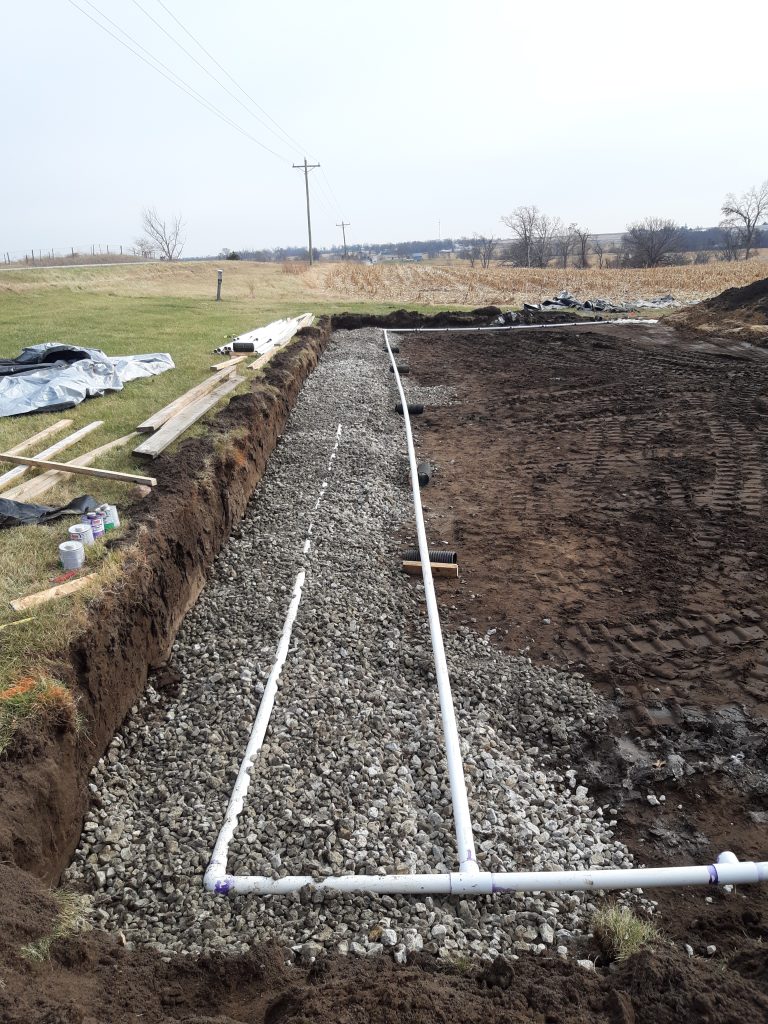
The drainfield distributes septic tank effluent into suitable soil for further treatment and dispersal. Depending on the approved system, trenches may contain pipe and aggregate or another approved distribution product. The soil beneath and around the receiving area is an essential treatment component.
A drainfield is not simply a place to dispose of unwanted water. Its size and layout must match the design flow and the soil’s ability to accept and treat wastewater. Clean roof runoff, foundation drainage, and sump-pump discharge should be directed away from the septic treatment area.
Distribution boxes and trench layout
Where a distribution box is used, its installation must deliver wastewater to the intended outlets as designed. Settlement or an improperly positioned box can send too much flow toward one portion of the drainfield while leaving another underused.
- Stable installation: Support components to limit settlement and movement.
- Correct elevations: Install piping and distribution components to the approved grades.
- Protected soil: Avoid unnecessary traffic, compaction, and disturbance in the treatment area.
- Inspection access: Provide access points required by the design and local authority.
- Surface drainage: Finish the site so runoff does not collect over the system.
Considering a gravity septic system? Call or text Patrick at 319-936-6100 to discuss installation or replacement near Center Point and throughout our surrounding service area.
↑ Back to septic services index
Septic Pumps, Pressure Distribution and Alarms
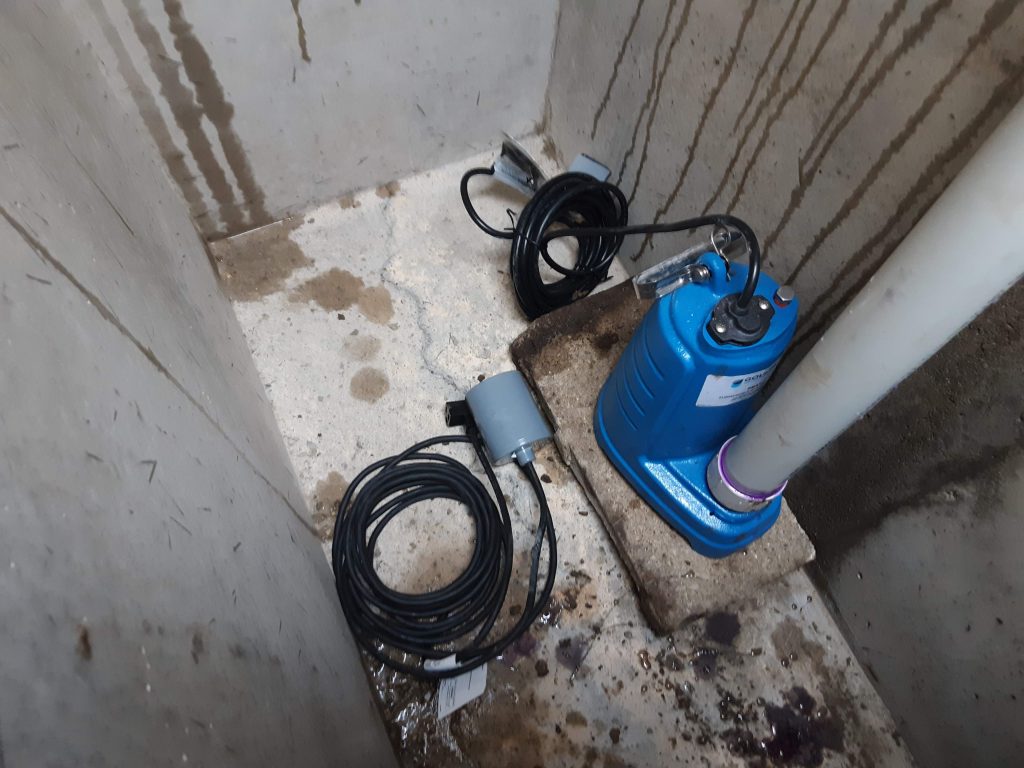
Some properties need a pump to move septic tank effluent to a higher treatment area or distribute it through a pressure network. A pumped system can serve a conventional drainfield, mound, or other approved treatment arrangement. The pump moves wastewater; it does not replace the treatment provided by the rest of the system.
Pumping uphill and pressure distribution are different
A pump may lift wastewater to a point where it continues by gravity. A pressure distribution system uses a designed piping network to apply wastewater across the receiving area. These arrangements have different requirements, so the pump, piping, and controls must match the approved design.
How a pump chamber works
A pump chamber collects effluent before sending it onward in doses. Depending on the design, the chamber may be a separate tank or part of an approved compartmented tank. Controls establish when the pump operates, while a high-water alarm warns when the liquid reaches an abnormal level.
- Pump selection: Match the required flow and total pumping head, including elevation and friction losses.
- Dose volume: Deliver the amount of wastewater specified by the system design.
- Float settings: Establish the intended operating levels and protect against unsuitable pump operation.
- Service access: Allow appropriate access to pumps, controls, and connections.
- Electrical coordination: Provide the required electrical installation through the appropriate qualified trade.
Demand dosing and timed dosing
Demand dosing starts a pumping cycle when wastewater reaches a set level. Timed dosing uses controls to schedule pumping cycles, subject to operating levels and safeguards. The approved design determines which approach is appropriate and how the controls should be configured.
What a septic alarm means
A high-water alarm signals that the liquid has reached the alarm level. Possible causes include a power interruption, pump or float problems, unusually heavy water use, or a restriction downstream. The alarm alone does not identify which component has failed.
If an alarm activates, reduce household water use and contact a septic professional promptly. Silencing the audible alarm does not correct the problem. Avoid opening electrical controls, reaching into tanks, or repeatedly resetting a tripped breaker.
Installation and replacement near Center Point
Madison’s Homes installs septic components according to the approved system layout and coordinates related plumbing and electrical work. We serve Center Point, Alburnett, Palo, Toddville, and surrounding communities within our service area.
Discuss your septic installation or pump-system concerns: Call or text Patrick at 319-936-6100.
↑ Back to septic services index
Mound and At-Grade Septic Systems
Some septic system installation projects require mound or at-grade treatment systems because the property does not have suitable conditions for a conventional underground drainfield. Shallow groundwater, bedrock, or other soil limitations may require a different treatment arrangement. Mound and at-grade systems are options on certain sites, subject to evaluation, an approved design, and local acceptance.
How a mound septic system works
A mound system raises the wastewater distribution area above the original ground surface using specified sand fill. Septic tank effluent is typically collected in a pump chamber and dosed through a pressure distribution network. The wastewater moves through the treatment sand and into the underlying soil for further treatment and dispersal.
The mound’s size, shape, sand specifications, and placement are determined by the design. A mound cannot simply be built from available dirt or ordinary fill sand. The receiving soil beneath it remains an essential part of the system.
How an at-grade system differs
An at-grade system places its distribution area at or near the original ground surface and covers it with specified material. It generally relies more directly on suitable natural soil beneath that area. Whether this arrangement is appropriate depends on the site evaluation and the permitting authority’s requirements.
Mounds and at-grade systems are not interchangeable. Their suitability depends on the available treatment depth, soil characteristics, wastewater loading, and other design conditions.
Installation details that matter
- Protect the receiving area: Keep construction traffic, stockpiles, and unnecessary grading away from the proposed system.
- Work in suitable soil conditions: Avoid preparation that smears, ruts, or compacts wet soil.
- Use specified materials: Treatment sand, distribution products, and cover materials must match the approved requirements.
- Follow the planned elevations: Maintain the designed relationship between the natural soil, treatment layers, and distribution piping.
- Manage surface runoff: Grade surrounding areas so concentrated drainage does not flow onto the system.
Plan around the finished system
An above-ground treatment area affects how part of the property can be used. Discuss its location before planning a driveway, garage, addition, or landscaping project. Preserve access to tank lids, controls, and service points, and keep structures and vehicle traffic off the treatment area.
For projects near Center Point, Urbana, Shellsburg, Vinton, and Brandon, Madison’s Homes coordinates installation with the approved design and the authority responsible for the property’s location.
Explore system options: The University of Minnesota’s septic education resources explain mound and at-grade treatment concepts. Iowa and local requirements determine which options can be used on your property.
↑ Back to septic services index
Sand Filters and Advanced Septic Treatment Systems
Some properties need additional wastewater treatment beyond a conventional septic tank before the water reaches its approved dispersal or discharge location. Options may include sand filters, aerobic treatment units, or manufactured media filters. The appropriate system depends on site conditions, treatment requirements, and approval by the permitting authority.
Sand filter systems
A sand filter applies septic tank effluent across a bed of specially specified sand. As wastewater moves through the media, physical and biological processes provide additional treatment. Depending on the design, treated water may be collected beneath the filter and sent to the next approved component.
A sand filter and a sand mound serve different arrangements. A mound generally disperses wastewater through its sand layer into the natural soil below. A sand filter may collect treated wastewater through an underdrain. The approved design establishes the complete treatment route.
Aerobic treatment units
An aerobic treatment unit introduces air to support microorganisms that break down wastewater contaminants. Different products use different combinations of aeration, treatment media, settling compartments, and controls. These units require the correct wastewater loading and operating conditions to perform as intended.
Installing an aerobic unit does not automatically eliminate the need for a drainfield or authorize surface discharge. The complete system must include an approved method of final treatment and dispersal or discharge.
Manufactured media filters
Other treatment products use materials such as textile or synthetic media to support treatment organisms. Wastewater is distributed through the unit according to the manufacturer’s design. Some systems recirculate wastewater through treatment components before sending it onward.
Compare Septic System Installation Options Before Choosing
- Site suitability: Determine whether the system can meet the property’s soil, space, and treatment limitations.
- Installation cost: Include tanks, excavation, treatment equipment, piping, controls, and required electrical work.
- Operating expenses: Consider electricity, service visits, replacement parts, and any required sampling.
- Service availability: Confirm that qualified providers can maintain the selected equipment.
- Owner responsibilities: Understand alarm response, maintenance agreements, and operating requirements before installation.
Septic System Installation follows the approved design
Tank elevations, watertight connections, treatment-media specifications, dosing arrangements, and startup checks all affect performance. Madison’s Homes coordinates excavation and installation with the approved plan, manufacturer requirements, and the appropriate inspection authority.
Properties in Linn County and nearby Benton and Buchanan County communities may have different approval and inspection procedures. We confirm the responsible authority for the project address before establishing the installation scope.
Technical background: Visit the University of Minnesota’s septic system education page to learn about treatment technologies. Local approval is required for the system selected for your property.
↑ Back to septic services index
Excavation and Equipment for Septic System Installation
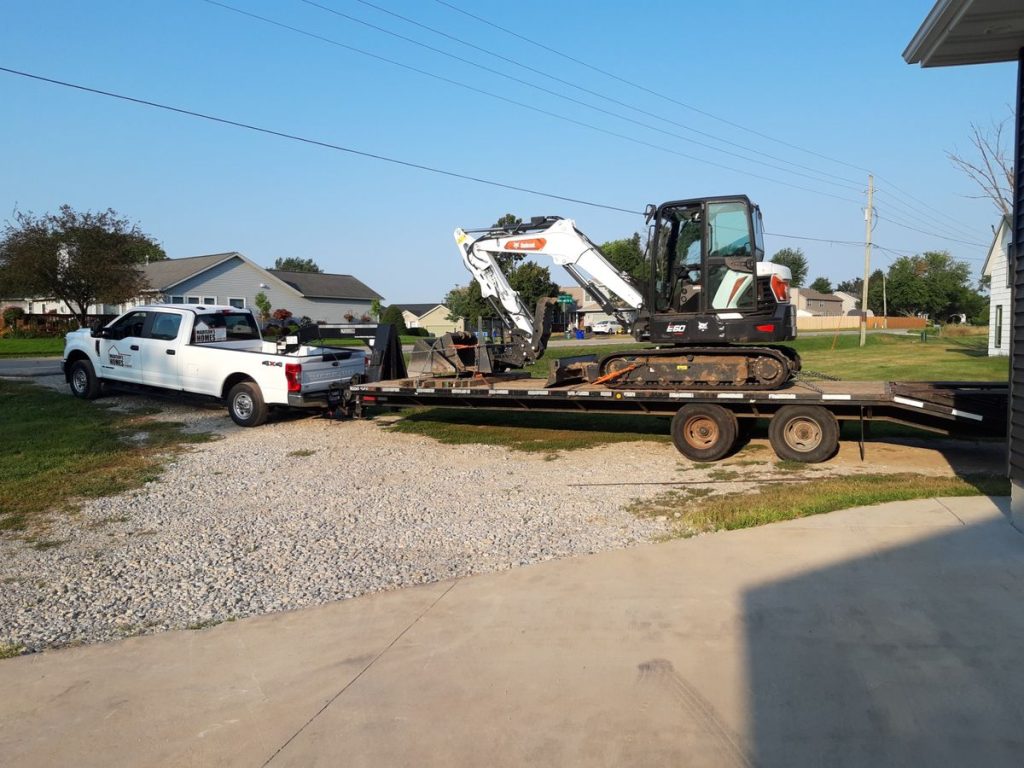
Septic system installation requires planning how equipment, delivery trucks, tanks, and materials will move through the property. Madison’s Homes owns a Bobcat E60 excavator and a Bobcat T590 compact track loader for excavation, material handling, and grading work.
What your yard will look like afterward: Septic installation is a major excavation project, so your yard will look like a work area when we finish—not a finished lawn. Expect equipment tracks, disturbed soil, and slightly raised backfill over newly buried lines where appropriate for the system design. These areas generally become less noticeable as the soil settles and grass is reestablished, but the timing varies. Finish landscaping and lawn restoration are not included unless stated in your written proposal. Contact Madison’s Homes before leveling raised areas to protect the system’s required soil cover and drainage.
Planning a new home or addition? Madison’s Homes also handles concrete basement walls and foundations.
Plan access before equipment arrives
Access width, overhead obstructions, slopes, fences, and existing improvements affect how the work can be completed. Tank delivery and placement also need a practical route and suitable working space. We discuss these conditions when reviewing the property and preparing the installation scope.
- Utility locations: Arrange required utility locating before digging and identify private lines that may need separate locating.
- Equipment routes: Plan access around buildings, wells, existing septic components, and the proposed treatment area.
- Material staging: Choose locations for excavated soil, approved bedding, and other installation materials.
- Tank placement: Coordinate delivery and lifting equipment appropriate for the tank’s weight, reach, and manufacturer requirements.
- Ground conditions: Account for wet soil, unstable excavation, and weather-related scheduling limits.
Protect the soil treatment area
The future drainfield needs protection throughout construction. Equipment traffic and stockpiled soil can compact the receiving area before installation begins. We plan excavation and material movement around the approved layout to reduce unnecessary disturbance.
Tank bedding, piping, and backfilling
Tank support and bedding must suit the selected tank and site conditions. Piping needs the specified support and elevations, and connections must be properly sealed. Required inspections and checks are completed before the applicable work is covered.
Backfilling follows the tank manufacturer’s instructions and approved installation requirements. Final grading directs surface runoff appropriately while preserving access to lids, risers, and service points.
Coordinate excavation with your building project
For a new home or addition, septic work should fit the foundation, driveway, utility, and construction-access plans. Madison’s Homes also offers concrete basement walls, framing, and licensed interior plumbing, allowing you to discuss those related portions of the project directly with Patrick.
Planning septic excavation? Call or text 319-936-6100 to discuss your property near Center Point or in our surrounding service area.
↑ Back to septic services index
Septic System Installation and Replacement Costs
The cost of septic system installation or replacement depends on the property and the approved system it requires. A straightforward installation on an accessible site can involve substantially different work from replacing a system on a restricted lot or installing additional treatment equipment. Madison’s Homes prepares project-specific estimates after reviewing the available site information and scope.
What affects the price?
- Site evaluation and design: Required soil information, testing, system planning, and application materials.
- System type and capacity: Tank sizes, treatment components, and the required dispersal area.
- Excavation conditions: Access, digging depth, groundwater, rock, and handling of excavated material.
- Installation materials: Tanks, piping, bedding, aggregate, specified sand, and distribution products.
- Pumps and electrical work: Pump chambers, controls, alarms, wiring, and related installation.
- Existing-system work: Pumping, removal or approved abandonment, and replacement connections.
- Permits and inspections: Requirements established by the authority responsible for the property.
- Site completion: Required backfilling and grading. Finish landscaping, seeding, sod, and lawn repairs are excluded unless specifically included in your written proposal.
Replacing a tank is different from replacing a complete system
A tank-only estimate should not be compared directly with a price that includes a new drainfield, pump chamber, or treatment unit. Before comparing proposals, check which components are included and whether the existing portions are suitable and approved for continued use.
Know what your estimate includes
A useful proposal identifies the planned work, materials, and responsibilities. Ask whether design, permit fees, electrical work, pumping, old-tank abandonment, excess-soil removal, and final restoration are included or handled separately.
Some conditions become clear only after excavation. The proposal should explain how unexpected conditions and changes to the approved scope will be discussed and priced before additional work proceeds.
Plan additions and septic work together
If the septic project accompanies a new home or addition, reviewing the full construction plan early can help avoid conflicting excavation, utility routes, and access arrangements. Patrick can also discuss concrete basement walls, framing, and licensed interior plumbing as separately defined portions of the project.
Information that helps us prepare an estimate
- The project address and your contact information.
- Whether this is new construction, replacement, or a proposed addition.
- Existing septic drawings, soil reports, permits, or inspection findings.
- Known problems, access restrictions, and your desired schedule.
Request a septic installation or replacement estimate: Call or text Patrick at 319-936-6100. We serve Center Point and nearby communities including Urbana, Shellsburg, Vinton, and Brandon, with availability confirmed for the project address.
↑ Back to septic services index
Septic System Maintenance and Pumping
Regular maintenance helps protect the septic tank, treatment equipment, and drainfield. The right schedule depends on the system, household use, inspection findings, and manufacturer instructions. Keep a record of pumping, inspections, repairs, and alarm events so your service provider can review changes over time.
Pumping removes accumulated solids
Septic tanks retain sludge and floating scum. These materials accumulate even when the system appears to be working normally. Pumping removes accumulated solids before they take up excessive storage space or escape into downstream components.
A septic tank normally contains liquid up to its operating level. Seeing liquid inside does not, by itself, mean the tank needs pumping. A qualified service provider evaluates sludge and scum accumulation, tank condition, and household use to recommend an appropriate pumping interval.
Arrange pumping with a properly licensed septic pumping provider. Pumping alone does not repair a damaged tank, correct a plumbing blockage, or restore every failing drainfield.
Components that need attention
- Baffles and connections: Check for damage, deterioration, and conditions that allow solids to leave the tank.
- Effluent filters: Service according to the manufacturer’s instructions and the system’s maintenance plan.
- Pumps, floats, and alarms: Have operating components checked as appropriate for the installed equipment.
- Advanced treatment units: Follow required service agreements, operating instructions, and monitoring requirements.
- Lids and risers: Keep covers secure and service access clear.
Daily habits that protect your system
Repair leaking toilets and faucets, and spread heavy water use across the week where practical. Keep wipes, grease, sanitary products, medications, solvents, and other unsuitable materials out of drains. Products labeled “flushable” can still cause problems.
Routine septic additives do not replace pumping or proper maintenance. Before adding a treatment product, consult a qualified professional familiar with your system and its manufacturer’s guidance.
Protect the drainfield
Keep vehicles, buildings, material stockpiles, and other heavy loads off the treatment area. Direct roof runoff and other clean drainage away from it. Discuss landscaping changes before digging, planting trees, or changing grades near septic components.
When maintenance reveals a larger problem
Persistent backups, repeated filter clogging, damaged components, or wastewater surfacing need investigation. Madison’s Homes can discuss septic repairs or replacement and licensed interior plumbing work to help address the source of the problem.
Homeowner resource: Visit the University of Minnesota’s septic care and maintenance guide for additional educational information.
↑ Back to septic services index
Warning Signs and Septic System Repairs
Slow drains, sewage odors, backups, and wet areas near a drainfield deserve investigation. These symptoms do not automatically mean the entire septic system needs replacement. A plumbing blockage, damaged pipe, restricted filter, pump problem, or overloaded treatment area can produce similar warning signs.
What are you noticing?
- One fixture draining slowly: A local trap or branch-drain blockage may be involved.
- Several fixtures backing up: The building drain, sewer connection, or septic system may need investigation.
- A high-water alarm: Reduce water use and arrange prompt assessment of the pump system and related components.
- Persistent sewage odors: Investigate plumbing traps, venting, tank covers, and outdoor system conditions.
- Wastewater surfacing outside: Keep people and pets away and contact a septic professional promptly.
- A sudden depression near a tank: Keep clear of the area because a damaged cover or tank may create a collapse hazard.
Check the cause before choosing a repair
Useful information includes when the problem started, which fixtures are affected, whether an alarm has activated, recent water use, and the system’s service history. Existing drawings and inspection reports can help locate components and explain how the system was intended to operate.
Patrick’s Master Plumber license allows Madison’s Homes to address interior plumbing problems as well as septic installation and repair work outside. That helps connect the investigation from the household drains to the outdoor wastewater system.
Repairs depend on the findings
Work may involve repairing a damaged connection, replacing a deteriorated component, correcting a plumbing problem, or arranging service for installed equipment. If the treatment area is failing or the system is unsuitable for the property’s needs, replacement or an approved upgrade may be necessary.
Changes to a septic system may require permits, design review, and inspection. The repair scope should be established with the appropriate authority before construction begins.
What to do while waiting for an assessment
Limit water use when backups or high-water conditions occur. Avoid contact with sewage, keep tank covers closed, and do not enter a tank or excavation. Pumping may provide temporary relief in some situations, but it does not correct every underlying failure.
Discuss a septic or plumbing problem: Call or text Patrick at 319-936-6100 with your project address and a description of the symptoms. Appointment availability will be confirmed when you contact us.
↑ Back to septic services index
Time-of-Transfer Septic Inspections in Linn County, Iowa
Selling a home or building served by a private septic system? Iowa generally requires a Time-of-Transfer septic inspection before the sale or deed transfer, unless an exemption or authorized alternative applies. Patrick Madison is an Iowa DNR-certified Time-of-Transfer septic inspector serving Center Point and our surrounding service area.
Schedule early in the selling process
Contact an inspector before the closing date approaches. Locating components, arranging access, coordinating any required pumping, and investigating problems can take time. If repairs or replacement are needed, early inspection gives the parties more opportunity to establish the next steps.
What does the inspection evaluate?
A Time-of-Transfer inspection documents the condition and operation of the private sewage disposal system under Iowa’s inspection requirements. The work considers the septic tank and the treatment components downstream, rather than checking only whether household drains appear to work.
The components and procedures involved depend on the installed system. Access, operating conditions, available records, and applicable inspection requirements determine what must be arranged for the visit.
Helpful information to gather
- Property details: The address, owner’s contact information, and anticipated transfer date.
- System records: Existing permits, installation drawings, previous reports, and known component locations.
- Pumping records: Recent service documentation for the inspector to review.
- Operating history: Known backups, alarms, repairs, or periods when the property was unoccupied.
- Access information: Gates, pets, buried lids, and anything affecting safe access to the system.
An older system does not automatically need replacement
Iowa DNR explains that an existing system with functioning secondary treatment that is not creating a public health or environmental hazard does not automatically have to meet current construction standards solely because the property is transferring. Inspection findings determine whether problems need further action through the appropriate authority.
If the inspection identifies a problem
Patrick can explain the findings and discuss the work that may be needed. Madison’s Homes also provides septic installation and replacement, excavation, and licensed interior plumbing. Any proposed repair or replacement is a separate scope of work, with required approvals and inspections.
An inspection describes conditions evaluated at the time of the visit. It does not guarantee the system’s future performance or eliminate ongoing maintenance responsibilities.
Schedule a Time-of-Transfer inspection: Call or text Patrick at 319-936-6100 with the property address and anticipated closing date.
Official information: Visit the Iowa DNR Time-of-Transfer page for inspection information, exemptions, and related forms.
↑ Back to septic services index
Septic System Installation for New Homes and Additions
A new home or addition brings several construction decisions together: where the building sits, how the basement is excavated, where utilities run, and how wastewater will be treated. Planning these together helps avoid conflicts between the septic system and the rest of the project.
Building a new home on an acreage
Review septic suitability before finalizing the house, driveway, well, and outbuilding locations. The treatment area needs suitable ground and protection during construction. Tank delivery, equipment access, plumbing elevations, and future servicing also need space in the overall plan.
Will an addition require a septic upgrade?
An addition does not automatically mean complete septic replacement. Added bedrooms, changes in occupancy or use, and the existing system’s capacity and condition can affect what is required. Review the proposal with the appropriate permitting authority before assuming the current system can serve the expanded home.
Even an addition that does not increase wastewater flow may affect the septic layout. New foundations, access routes, grading, or utilities can conflict with tanks, piping, treatment areas, or required separation distances.
Septic installation, basement walls, framing, and plumbing
Madison’s Homes offers related construction services that can be planned alongside your septic project:
- Excavation: Site access, foundation excavation, and septic installation work.
- Concrete basement walls: Basement and foundation construction within the agreed project scope.
- Framing: Framing for new construction and home additions.
- Licensed interior plumbing: Water supply, drain, waste, and vent piping, along with fixture connections.
- Septic installation and replacement: Outdoor wastewater components installed according to the approved design.
Separate approvals, coordinated work
Septic approvals and building or plumbing permits serve different purposes. For a Linn County property, we coordinate septic work with Public Health and building or plumbing work with the authority responsible for that address. Projects in nearby counties follow their applicable approval procedures.
Patrick’s qualifications as an Iowa Master Plumber and certified septic installer allow Madison’s Homes to discuss both interior plumbing and the outdoor wastewater installation. Electrical and other specialized work are coordinated with the appropriate qualified trades.
Start with the whole project
Bring your proposed floor plan, bedroom count, site layout, and available septic records to the discussion. Whether you need only septic work or want to discuss basement walls, framing, and plumbing too, we can establish which portions Madison’s Homes will handle and define them in the proposal.
Planning a new home or addition? Call or text Patrick at 319-936-6100. We serve Center Point, Toddville, Alburnett, Palo, Robins, Hiawatha, Walker, Central City, Marion, nearby Cedar Rapids properties, Urbana, Shellsburg, Vinton, and Brandon. Contact us with the project address to confirm availability.