
Concrete Contractor – Cedar Rapids & Marion, Iowa | Madison’s Homes
Concrete driveways, sidewalks, patios, garage floors and residential flatwork. Serving Cedar Rapids, Marion and surrounding Iowa communities.
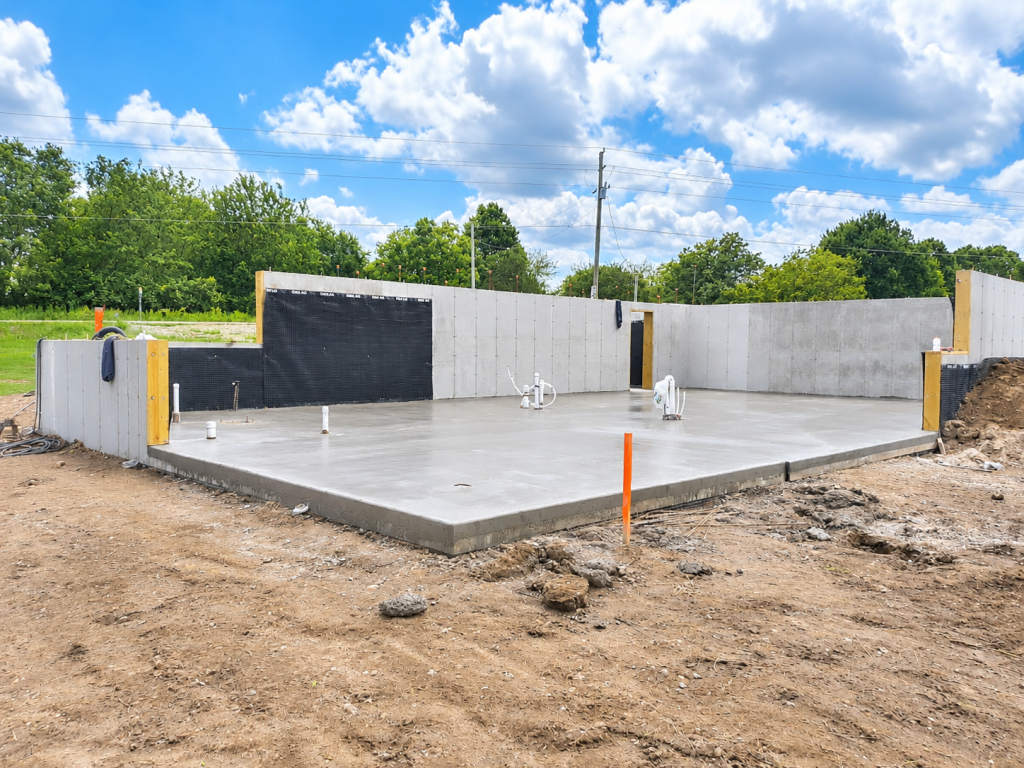
Looking for a concrete contractor in Cedar Rapids, Marion, or the surrounding Iowa communities? Madison’s Homes provides residential concrete flatwork, including new concrete driveways, driveway replacement, sidewalks, patios, garage floors, basement floors, and concrete slabs.
With 40+ years of hands-on construction experience, we understand that durable concrete starts with proper preparation, the right concrete mix, professional placement, and appropriate finishing and curing.
Concrete Flatwork Services
Select a topic below to learn more about our concrete services and construction methods.
Concrete Driveways and Driveway Replacement – Cedar Rapids, Iowa
Madison’s Homes provides new concrete driveway installation and replacement throughout Cedar Rapids, Marion, Center Point, and surrounding Iowa communities. Whether you are building a new home, replacing an aging driveway, or expanding an existing parking area, proper ground preparation and concrete placement are essential to a durable finished surface.
Driveway replacement may involve removing existing concrete, preparing and compacting the underlying base, setting forms, installing reinforcement where appropriate, and pouring the new driveway. We commonly consider 4,000 PSI concrete a good all-around mix, with the final specifications selected for the project and expected vehicle loads.
Exterior concrete driveways normally receive a broom finish to provide traction in wet and icy conditions. Proper drainage, joint layout, curing, and freeze-thaw durability are important considerations in Iowa’s climate.
Concrete Sidewalks, Walkways and Approaches
Our concrete flatwork services include residential sidewalks, walkways, entrance paths, driveway approaches, and replacement of deteriorated concrete surfaces. Proper elevations and drainage help direct water away from buildings and reduce standing water on finished concrete.
Concrete sidewalks need appropriate base preparation, thickness, reinforcement when specified, and properly located control joints. Exterior broom finishing provides a textured walking surface.
Concrete Patios and Outdoor Living Areas
Madison’s Homes installs concrete patios and other outdoor slabs for homeowners in Cedar Rapids, Marion, and nearby communities. Concrete patios provide a durable surface for outdoor furniture, grilling areas, and backyard gathering spaces.
Patio construction begins with evaluating the site, establishing drainage and finished elevations, preparing the base, and setting forms. We plan control joints around corners and changes in slab geometry to help manage shrinkage cracking. Exterior concrete normally receives a broom finish.
Garage Floors, Basement Floors, Shop Floors and Interior Concrete Slabs
Madison’s Homes provides concrete flatwork for garages, basements, workshops, utility areas, and other interior spaces. Interior floors require careful attention to base preparation, elevations, slab thickness, reinforcement, and the intended use of the finished surface.
Unlike exterior broom-finished concrete, interior concrete floors are normally finished smooth with a power trowel. Power troweling helps produce a dense, smooth surface suitable for many indoor applications. A power-troweled finish is different from mechanically polished concrete, which requires additional grinding and polishing after the slab hardens.
Garage floors may require different finishing and mix considerations depending on exposure to freezing temperatures, road salts, and vehicle traffic. We select concrete specifications and finishing methods appropriate to each application.
Concrete Flatwork Preparation, Excavation and Reinforcement
A durable concrete driveway, sidewalk, patio or floor starts below the finished surface. Madison’s Homes evaluates existing soil conditions, drainage, required elevations, excavation depth and the supporting base before concrete placement.
Where needed, unsuitable materials are removed and a suitable granular base is placed and compacted. Forms establish the slab dimensions, finished elevations and drainage slopes. Concrete thickness and reinforcement are selected according to the intended use, loads, site conditions and applicable requirements.
Steel reinforcing bars, welded wire reinforcement or other specified reinforcement can help manage crack widths and maintain slab integrity, but reinforcement does not eliminate concrete shrinkage or guarantee a crack-free slab.
4,000 PSI Concrete and Understanding Concrete Mix Ingredients
Madison’s Homes considers 4,000 PSI concrete a good general-purpose mix for many residential flatwork applications. The appropriate concrete strength and mix design depend on the project, exposure conditions and construction requirements. Compressive strength alone does not determine how well concrete withstands Iowa winters.
Portland Cement, Water, Sand and Stone
Concrete is made using cementitious materials, water, fine aggregate such as sand, and coarse aggregate such as gravel or crushed stone. Cement reacts chemically with water through hydration, creating compounds that bind the aggregates together. Excess water can increase porosity, shrinkage and cracking while reducing concrete strength and durability.
Air-Entrained Concrete for Iowa Freeze-Thaw Conditions
Exterior concrete exposed to freezing, thawing and moisture generally benefits from properly specified air entrainment. Air-entraining admixtures create a system of microscopic air voids that helps relieve pressure when water within hardened concrete freezes. These tiny air spaces improve resistance to freeze-thaw damage when combined with an appropriate mix, finishing and curing.
Air entrainment must be controlled. Excessive vibration or improper handling can affect the air-void system, while inadequate consolidation can leave unwanted large voids. Exterior air-entrained concrete also requires appropriate finishing practices.
Fly Ash in Concrete
Fly ash is a fine supplementary cementitious material that can replace part of the Portland cement in a concrete mixture. It can improve workability, reduce permeability and contribute to later-age strength through pozzolanic reactions. Depending on the type, dosage and temperature, fly ash can slow early strength development, which is important when planning concrete placement during cold weather.
Calcium Chloride and Concrete Accelerators
Calcium chloride is an accelerating admixture sometimes used to speed concrete setting and early strength development in cold conditions. Dosages such as 1% or 2% generally refer to the weight of cementitious materials, not the total weight of the concrete batch.
Calcium chloride is not antifreeze and does not replace proper cold-weather protection. Because chloride can contribute to corrosion of embedded steel and other metals, nonchloride accelerators are often preferred, particularly for reinforced concrete. Admixture selection and dosage must follow the applicable specifications and manufacturer’s instructions.
Water Reducers and Other Concrete Admixtures
Water-reducing admixtures help improve workability without adding unnecessary mixing water. Retarding admixtures can slow setting during hot-weather placement. The ready-mix supplier can adjust the concrete mixture to meet specified strength, exposure, placement and finishing requirements.
Concrete Finishing – Exterior Broom Finish and Interior Power Troweling
Madison’s Homes provides concrete flatwork throughout Cedar Rapids, Marion, Center Point, and surrounding Iowa communities. The finishing method depends on whether the concrete is installed indoors or outdoors and how the surface will be used.
Exterior Concrete Broom Finish
Exterior driveways, sidewalks, patios, and walkways normally receive a broom finish. After the concrete is placed, leveled, and properly finished, a broom is drawn across the surface to create a textured finish that improves traction during wet weather. Broom finishing must be timed correctly, after bleed water has disappeared and the surface is ready for finishing.
Interior Concrete Power-Troweled Floors
Interior basement floors, garage floors, shop floors, and other enclosed concrete slabs are commonly finished using a power trowel. Mechanical troweling produces a smooth, dense surface. Finishing methods must be appropriate for the concrete mixture and exposure conditions. Air-entrained exterior concrete should not be subjected to hard steel-trowel finishing because of the increased risk of surface delamination.
Why Concrete Cracks and How Control Joints Help
Concrete naturally shrinks as it hardens and dries. Changes in temperature, moisture, slab geometry, and restraint can create tensile stresses that lead to cracking. Even properly installed concrete can develop cracks. The goal of good concrete construction is to reduce uncontrolled cracking and encourage shrinkage cracks to occur at planned locations.
Saw-Cut Control Joints
Control joints, also called contraction joints, create intentional weakened planes in concrete flatwork. Properly located and timed saw cuts encourage cracks to form beneath the joints rather than randomly across the finished surface. Joint spacing and depth depend on slab thickness, geometry, reinforcement, and construction conditions. Saw cuts cannot guarantee that every crack will follow a joint.
Inside Corners and Irregular Concrete Shapes
Cracking often begins at inside corners, offsets, and changes in slab geometry because stresses concentrate at these locations. Careful joint planning around corners and irregular shapes helps manage these stresses. Concrete foundation walls can also develop cracks near window and door openings, where reinforcement and structural detailing require special attention.
For information about poured concrete foundation construction, visit our Concrete Basement Walls page.
Cold-Weather Concrete Installation in Cedar Rapids and Marion
Iowa’s changing seasons affect concrete placement and curing. During cold weather, fresh concrete must be protected from freezing while it develops adequate strength. Concrete temperature, ground conditions, air temperature, curing methods, and protection measures all influence the construction plan.
Accelerating admixtures may help concrete gain early strength more quickly, but they do not eliminate the need for proper protection. Exterior concrete must also have an appropriate air-void system and mix design to withstand repeated freezing and thawing after it has hardened.
Concrete Curing and Long-Term Durability
Concrete requires moisture and suitable temperatures for cement hydration to continue. Proper curing helps concrete develop strength, reduces premature surface drying, and supports long-term durability. Freshly placed concrete should be protected from conditions that cause rapid moisture loss, freezing, or other early-age damage.
Contact Madison’s Homes – Concrete Contractor Cedar Rapids and Marion
Looking for concrete contractors near me, a concrete driveway replacement, a new patio, or an interior concrete floor? Madison’s Homes provides residential concrete flatwork in Cedar Rapids, Marion, Center Point, Hiawatha, Robins, Alburnett, and surrounding Iowa communities.
Contact Madison’s Homes to discuss your concrete project, site conditions, and scheduling.
Call or text: 319-894-5125
City Sidewalks and Driveway Approaches – Iowa DOT Class C and M Concrete
Concrete sidewalks, driveway approaches, curb connections, and other work within public rights-of-way may require concrete mixtures and construction methods specified by the local municipality. In Cedar Rapids, published city guidance identifies Iowa DOT Class C and Class M concrete for public sidewalks and driveway approaches, including C-3 and C-4 mix designations.
What Is C-3, C-4 or M-Mix Concrete?
Class C concrete is commonly used for Iowa concrete paving. Designations such as C-3 and C-4 identify particular aggregate proportions within the Iowa DOT concrete mix system. Class M concrete is designed for higher early strength and may be specified or permitted when earlier opening to traffic is important.
Municipal Concrete Requirements
City sidewalk and driveway approach construction can involve requirements for approved ready-mix suppliers, concrete air content, slab thickness, consolidation, expansion joints, curing, drainage, accessibility, permits, and inspections. Madison’s Homes reviews the applicable city requirements and project specifications before beginning concrete work within a public right-of-way.
Concrete mix selection and construction details must follow current municipal requirements and approved project plans.